Slow Science interview #2 – an interview with Javier Ruiz-Tagle (2/4)

Author: Sofia Pagliarin

The cultural hegemony of the English language: the unequal competition with native speakers
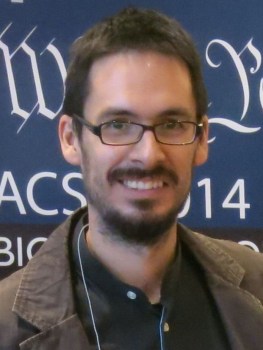
Foto carnetJavier Ruiz-Tagle is an Assistant Professor specialised in housing segregation, housing policies and urban politics and working at the Pontificia Universidad Católica de Chile. He completed his PhD in Urban Planning and Policy at the University of Illinois at Chicago.

In the previous post, I asked Javier to tell me about the episode at an international conference where he stood up and asked, provocatively, why we were talking in English about the Global South from the Global North (the conference was held in the UK).

In this post, we continue our discussion about the cultural hegemony of the English language.

Sofia: Javier, I understand that English nowadays is a hegemonic language for cultural and scientific production. But that’s our current lingua franca, so we in academia do not have so much other choice but learn it… that’s the game.

Javier: Well, remember that in the Global South many people do not have access to education so easily. So even in higher education, the access to academic literature written in English should not be taken for granted. This is partly why sometimes concepts that are already consolidated in the Global North, might not be so in the Global South, and vice versa. Because there is a language barrier cutting through scientific knowledge.

Furthermore, and you might also have had the same experience, non-native English speakers feel ‘less than’ native English speakers because they do not have the words to express themselves properly. For instance, it was only when I went to do my PhD in the US that I could improve my English proficiency. And at the beginning I could not express myself properly, for instance when it came to concepts – but that didn’t mean that I was wrong or that I was thinking poorly. What I thought was as valid and significant as much as what my native English speaking colleagues were saying. But my words had less power, because they were not communicated properly.

The consequence is that English native-speakers and non-native speakers are competing on an unequal level.
Sofia: But would it not also be useful then to ‘educate’ native English speakers to look beyond their own culturally hegemonic language and knowledge, and to realise that they have to communicate with people for whom English is the second or third language? Shouldn’t they make also the effort?

Javier: That would be great. But I know so far only a handful of people from the UK or the US that know a second language. I saw that effort from other Europeans, like Germans, French, or Dutch, where they might speak Spanish as a third language. But I did not see this effort from the British.

People from the US almost pretend when they travel that people should speak in English. It’s part of their ethnocentrism. And you can see this in academia as well.

Sofia: So the English language cannot be considered a lingua franca?

Javier: Well, no. An additional issue linked to the cultural hegemony of the English language is that it forces people to speak the same language and, consequently, our thinking is ‘narrowed’ to the same conventions and parameters. It narrows and limits our world, because concepts emerged from different cultures and contexts necessarily have to be translated into English – and this is not always easy, or even possible. This is a process of homogeneity, which tends to level out differences, as one of the aspects of the broader globalisation process.

But I myself am part of the problem. I went to the US for my PhD, I often travel to conferences to the Global North… I am also part of the system. I have to recognise that for instance in Chile, only 10% of the population speaks English, which is the elite, who can afford having their children study in the best universities and to study abroad. However, this type of self-reflexivity has to be present in critical social scientists. We can’t just pretend our privileged position doesn’t matter.
Sofia: In your opinion, how could we change this situation?

Javier: People should take more responsibility to work as ‘hinges’. I mean, not gatekeepers that control access, but people that would function like bridges across cultures and contexts. Knowledge is manifold and diverse. It cannot be homogenised and levelled out only because the use of the English language was gradually imposed to us.

Academic knowledge and scientific production should recognise, also in the diversity of languages that are employed, that there are different types of knowledge and different centres of knowledge production – and that many of these are located also in the Global South.
Disclaimer: The views and opinions expressed in this article are those of the authors and do not necessarily reflect the official policy or position of Slow Science.
Slow Science interview #2 – an interview with Javier Ruiz-Tagle (1/4)

Author: Sofia Pagliarin

Why is research about Latin America mostly in English?

foto web


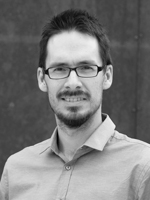
Javier Ruiz-Tagle is an Assistant Professor specialised in housing segregation, housing policies and urban politics and working at the Pontificia Universidad Católica de Chile. He completed his PhD in Urban Planning and Policy at the University of Illinois at Chicago.


I met Javier last time during a conference in Leeds in September 2017. At the closing plenary session, focused on African cities, the usual round of questions & answers started. Javier stood up and asked provocatively why Global South issues have to be discussed in Global North venues (especially in the UK) and why, if we were at a conference of left-wing, critical social scientists, we were still only talking in English.

In July 2018, I got in touch with him to know more about that episode, not only to disentangle his motivations, but also to what extent the English language as the current lingua franca can uncontroversially be considered as such.

The following text is a synthetic re-elaboration of our Skype talk – during which, by the way, we could talk in Spanish (another hegemonic language?) – structured in four posts and reviewed together with Javier before its online publication on the Slow Science blog.
Sofia: Javier, can you tell me about how you came to stand up during the plenary and ask why we were talking in English?

Javier: Yes, of course. But I don’t think at all that I was saying that we should not talk in English, nor I was complaining about it. My aim was not to criticise, but rather to put under discussion the asymmetry of academic production among the ‘Global South’ and the ‘North’. I was calling for a joint and serious discussion about this topic.

I was making the point that the Global South is a place where we study and conduct a lot of research, but that at the end of the day our research never makes it to the North – it is the North that comes to us.
Sofia: Can you give an example?

Javier: Sure. For instance, in urban studies, we often have Western scholars from Europe or the US that come to the Global South, for instance India, Africa or Latin America, and do their targeted fieldwork in our cities, go back to their offices in the North and then write books and articles about us in English. Books and articles that are not even translated for instance to Spanish or Portuguese, but that we have to cite anyways, because they become part of the academic and official knowledge about our cities.

Most of the time these scholars don’t even have contacts with local academics, just with a select few – certainly the ones that can speak English -, and then publish stuff about us. This is what happens for academic production about Latin American cities. The research and the fieldwork are neither communicated nor shared with local scholars – it stays within the limits of the English language, as in a bubble formed by language barriers – so how can they claim to have understood something about our cities? Which kinds of theories are made out of this process? That’s asymmetry.

Looking at it broadly, you can see that academic production and knowledge about cities in the Global South is mediated by London, as the capital of the largest empire in human history, and all this comes with that legacy. It has to go to London first and then it is recognised, and comes back to us.
Sofia: But there have been scholars that have been critical about this…

Javier: Yes. This isn’t new of course, and scholars have raised these issues in the past decade or so. However, if you look at what happened to the ‘Global South’ scholars that actually raised these questions, they are now all in the North (i.e. Jennifer Robinson, Ananya Roy, Susan Parnell).

First, these scholars come from the ‘North of the South’, so to say – so South Africa and India, where English is one of the official languages, and they have – at least partially – an Anglo-Saxon culture. This doesn’t happen with scholars that do publish a lot, but do so in a local language, such as Spanish or Portuguese. Knowledge and research that is not produced in English, in a way, does not exist. So this is the first aspect of the power asymmetry of academic production in English.

The second thing is that, once they are recognised, they flee to the Global North. These scholars are ‘co-opted’ by the centres of knowledge production in the North. From South Africa or India they go to London, Berkeley or Manchester. It is clear that there is a centralisation of academic production by means of the hegemonic role of the English language. This is the second aspect of power asymmetry.

These scholars are of course very progressive and all – but these scholars set the research agenda about what we, in the South, have to study about the South. This means that studies about the Global South are finally made ‘top-down’.
Sofia: …top-down?

Javier: Yes, for instance there is this association, the Latin American Studies Association (LASA), that includes scholars studying and researching Latin America in different fields, for instance literature studies, history, urban studies, geography and other stuff. But the members are mostly English-speaking, from Europe and from the US, and they do their annual conference in the Global North. What happens then is that these people set the agenda, define themes, write handbooks and ultimately decide what we Latin Americans have to study about Latin America (although this is starting to change in the last 5 years or so).

So in this sense there is an ‘occidentalism’ about the Global South – that is, that knowledge about the Global South is mediated by the North which is very much marked by the language we use to produce such knowledge.

And this is also partly our fault: it is difficult for us in the Global South to communicate, network and organise. We from Latin America are not connected to Africa or the Middle-East directly. This is also because we in Latin America first learn about European history, then about our country, and very little is left to indigenous cultures or to other continents. Everything goes through London, which in turn is connected to everybody.
Disclaimer: The views and opinions expressed in this article are those of the authors and do not necessarily reflect the official policy or position of Slow Science.